





There are trips that tick a box, and then there are trips that genuinely recalibrate how a person sees the world. A safari in Africa falls firmly into the second category. It doesn’t matter how many countries are on the passport, how many border crossings have been made or how many overnight buses have been endured — the African bush has a way of stopping even the most well-travelled person in their tracks.
And the good news? Whether the goal is full-on luxury or a deeply specialist experience built around birds, the continent delivers on every level.
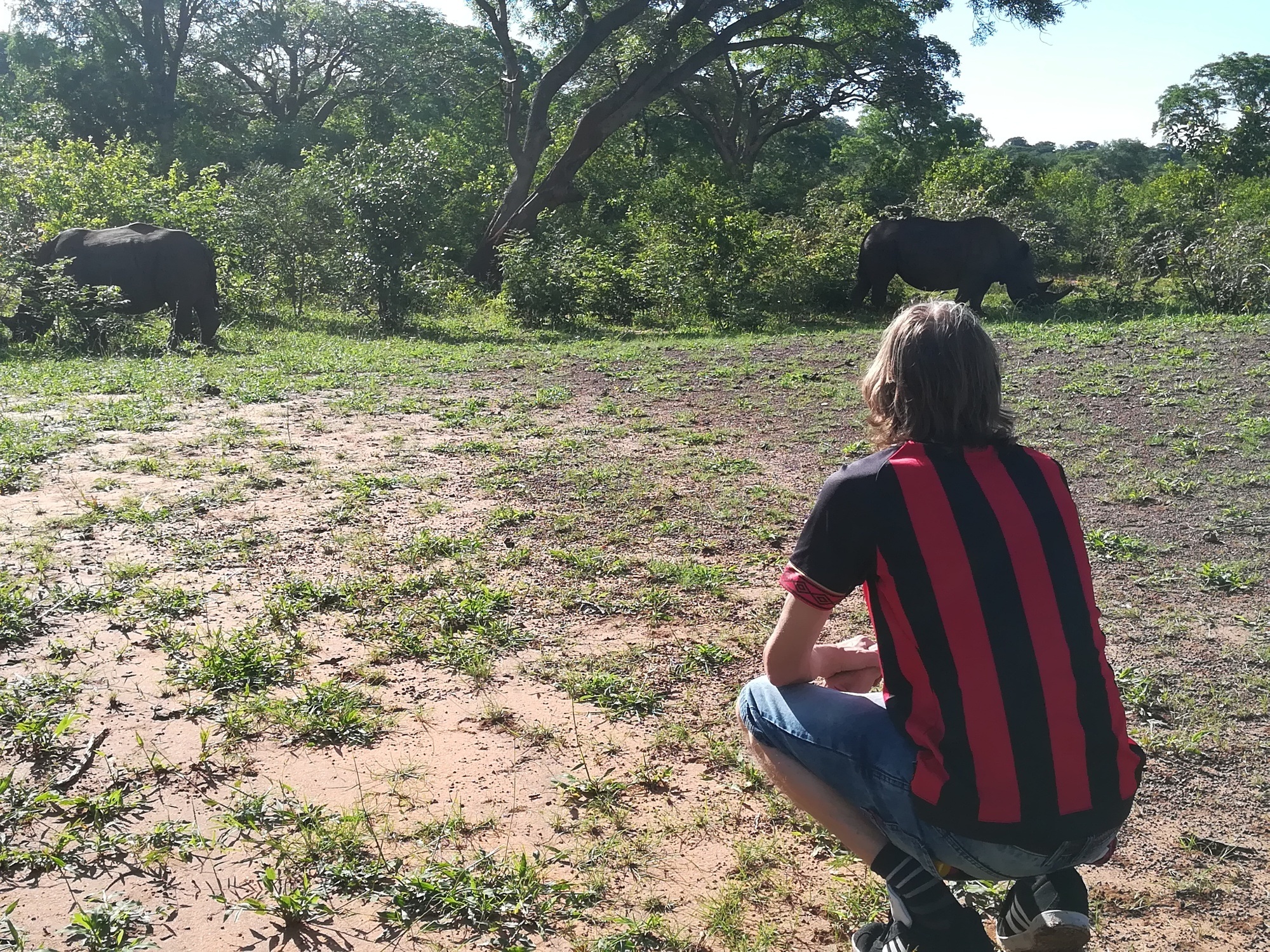
On the rhino walking safari at Mosi Oa Tunya Game Park nearby
The Safari Misconception Worth Busting
A lot of travellers assume safari is a single experience: a jeep, some lions, a sundowner. But Africa is not one place, and safari is not one thing. It stretches from the vast open plains of the Serengeti to the labyrinthine waterways of the Okavango, from the mist-wrapped forests of Rwanda to the dry riverbeds of Namibia. Each ecosystem has its own character, its own cast of wildlife and its own brand of magic.
The travellers who get the most out of it are the ones who come with a purpose — and who choose their destination, their camp and their guide accordingly.

Why a Safari in Africa Belongs on Every Serious Traveller’s List
The Case for a Luxury Safari (Yes, Really)
Backpackers and budget travellers sometimes raise an eyebrow at the idea of a luxury safari. Isn’t it a bit much? Isn’t roughing it more authentic?
Here’s the honest answer: not in Africa. The reason the best safari experiences sit at the top end of the market isn’t about status — it’s about access. Private concessions, expert guides, exclusive traversing rights across vast areas of wilderness, and the freedom to spend as long as needed at a sighting without being beholden to a group timetable — these are things that money genuinely buys in the bush, and they make a material difference to what gets seen and experienced.
A luxury safari also means private vehicles and seasoned guides who have spent years — sometimes decades — learning a single ecosystem. It means camps positioned in prime wildlife territory, often on private land far from the national park crowds. It means being woken at five in the morning with coffee and heading out before the light even breaks, with nothing between the vehicle and the horizon except possibility.
The Okavango Delta in Botswana is the gold standard for this kind of experience. With strict limits on visitor numbers and camps that hold fewer guests than most people have at a dinner party, it feels less like tourism and more like genuine wilderness immersion. Kenya’s private conservancies bordering the Masai Mara offer similar exclusivity, with the added drama of the Great Migration passing through between July and October.
South Africa’s private game reserves in the Greater Kruger area are another strong entry point — particularly for first-timers who want the big five experience with exceptional guiding and lodges that make no apologies for their level of comfort.
Why a Safari in Africa Belongs on Every Serious Traveller’s List
Birdwatching Safari: Africa’s Most Underrated Adventure
Here’s a travel secret that serious naturalists have known for years: a birdwatching safari in Africa is one of the most rewarding experiences on the planet, and it remains remarkably under the radar compared to the mainstream wildlife circuit.
Africa is home to more than 2,300 bird species. That figure alone should be enough to make any birder’s hands tremble slightly. But what elevates a dedicated birdwatching safari beyond simply noting species on a list is the quality of guiding, the depth of habitat access and the sheer drama of what turns up.
Zambia’s South Luangwa National Park is one of the continent’s most celebrated birding destinations, with over 400 recorded species and guides whose knowledge extends well beyond the large mammals most visitors focus on. The African skimmer, the Lilian’s lovebird, the collared palm thrush — these are the kinds of birds that serious listers travel specifically for, and South Luangwa delivers them in style.
Ethiopia is another destination that deserves far more attention than it gets. The Ethiopian highlands are home to extraordinary endemic species — birds found absolutely nowhere else on earth — including the Ethiopian wolf’s feathered equivalent in the form of the thick-billed raven and the stunning wattled ibis. Addis Ababa acts as an easy entry point, and the road south into the Rift Valley lakes region opens up wetland birding on a spectacular scale.
Uganda sits at the intersection of East and Central African bird zones, giving it an extraordinary diversity that few countries can match. Bwindi Impenetrable Forest alone hosts over 350 species, including 23 Albertine Rift endemics — and that’s before the mountain gorilla trekking adds a second once-in-a-lifetime experience to the same trip.
For those who want the birdwatching safari experience packaged with genuine comfort, several operators now run specialist itineraries with expert ornithologist guides travelling on the vehicle, dawn starts timed around songbird activity, and camps positioned in areas of maximum avian richness. It is, in the truest sense, a trip built around the birds rather than around convenience.
Combining Both: The Trip That Has Everything
The most satisfying Africa itineraries tend to be the ones that blend different experiences rather than committing entirely to one. A luxury safari in the Masai Mara combined with a dedicated birdwatching safari component in Uganda — with a few days in Rwanda to see the gorillas — is the kind of itinerary that covers multiple ecosystems, multiple wildlife encounters and multiple countries without ever feeling rushed.
East Africa is well set up for exactly this kind of multi-country trip, with reliable regional flights linking Nairobi, Entebbe, Kigali and Kilimanjaro into a circuit that can be done comfortably in two to three weeks.
Getting It Right
The difference between a safari that meets expectations and one that exceeds them almost always comes down to preparation. The best camps in Africa — particularly at the luxury end — book out far in advance, and the specialist birdwatching itineraries require guides and vehicles that need to be arranged well ahead of the travel dates.
Africa isn’t going anywhere. But the leopard in the tree, the Pel’s fishing owl hunting the riverbank at dusk, the sky full of flamingos over a soda lake — those moments are fleeting. The travellers who plan properly are the ones who actually get to see them.
That’s the real lesson Africa teaches, every single time.