





Most cold drinks mean giving up the coffee. Most coffee means giving up the cold. Cold brew is the one that does not make you choose. That is why a jug of it lives in the fridge instead of being something you only order out.
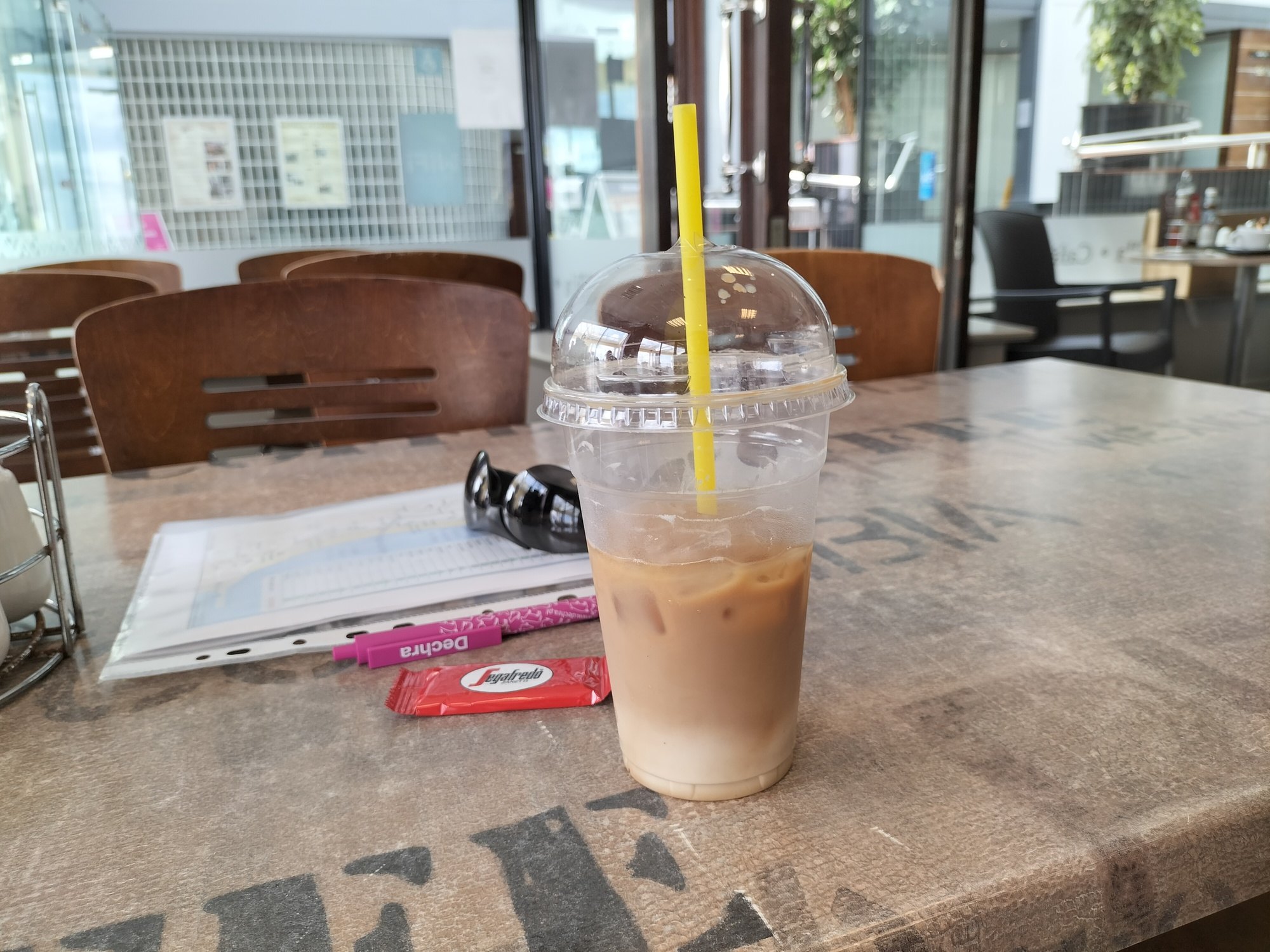
Best Coffee for Cold Brew or Iced Coffee
Keep that jug going for a month and a bag that used to last you two weeks is gone by Sunday. A finished cup made with a typical concentrate carries roughly twice as much ground coffee as a drip cup. That makes the bag a bigger decision here than in any other way you make coffee.
Why the bag empties so fast
A finished cup made with a typical concentrate carries roughly twice as much ground coffee as a drip cup. The National Coffee Association recommends a cold brew ratio of 1 gram of coffee to 4 or 5 grams of water. For dprip, it gives 1-2 tablespoons per 6 ounces. Dilute a 1:4 concentrate with an equal weight of water, and you are drinking about 1:8, against roughly 1:16 for drip. That is the doubling, though the drip figure is a conversion rather than a published number, since a spoonful varies with grind and roast, and a weaker ready-to-drink batch that skips the dilution lands closer.
Then batching does the rest. One brew covers several mornings, so the same bag stays in rotation without a fresh decision each time. The extra coffee comes from the recipe rather than the routine.
Iced coffee is not the same drink
Cold brew is a method: cool water and a long steep. Iced coffee is hot-brewed and then chilled. Many iced-coffee recipes brew stronger to withstand melting ice, while chilling hot coffee before serving requires no extra grounds at all. Concentrate-style cold brew is the one that raises the dose by design.
You get one shot, then you drink it for days
Every other way of making coffee gives you a second chance. Espresso, you adjust shot-to-shot. Pour-over, you correct halfway through the pour. Even with drip, you can make another pot.
Cold brew gives you nothing. You choose a bag, grind it, drown it, and walk away for twelve hours. What comes out is what you drink on Tuesday, and Wednesday, and Thursday. There is no dialing it in. There is only the bag you picked before you knew how it would turn out.
You will probably like whatever you use. Cold water and a long steep give a smoother, mellower cup and can soften harsh or stale notes that a hot brew would bring to the fore. What the steep will not do is pick the bag for you.
Five things to check. Two of them decide it
Grind coarse. The longer coffee sits in water, the coarser it should be, which is why the NCA classifies both cold brew and French press as coarse, describing the French press grind as similar to rock salt, compared to medium for drip. Go too fine, and you increase the risk of bitterness and a layer of silt in the glass. Buying pre-ground is a practical choice here, especially when the coffee is ground specifically for cold brew, and for a lot of people that is what decides between two otherwise similar brands.
Pick a roast for the way you drink it. If you are drinking it to cool down, a lighter roast may taste crisper and brighter over ice. If it ends up as a latte with oat milk, a darker, chocolate-forward coffee is likely to stay noticeable through the milk. If you drink it black, a medium roast is a common compromise.
Stop worrying about the roast date. Cold extraction is where an older bag goes down better than you would expect. Freshness is less decisive here than anywhere else, though not irrelevant, and the NCA still recommends grinding as close to brewing as possible, including cold brew.
Now the two that decide it.
What it costs you per batch. A bag that felt reasonable for a week of pour-over can vanish in two rounds of cold brew. Price the habit rather than the bag, and count the batches you make in a month. Some brands sell cold-brew grounds in multi-pound sizes, which lowers both the cost and the ordering frequency.
What is in it, and whether anyone has checked. Keep this in proportion. The National Coffee Association’s guidance on ochratoxin A, the mycotoxin most often raised in conversations about mold in coffee, says it is seldom found in coffee and is not known to have caused health issues for coffee drinkers. That is a trade association speaking about its own industry, so its institutional interest should be kept in view. This is not a question of acute risk.
It is a question of volume and information. If cold brew is your daily batch drink, you may be getting through more of it than the coffees you brew one cup at a time.
Organic certification, specialty grade, and laboratory testing answer different things. USDA organic governs what was permitted during coffee cultivation and processing, with allowed substances set out in the National List. The EPA separately sets tolerances for pesticide residues in food. Specialty grade is an industry quality classification, not a federal safety or contaminant certification. Laboratory data show what was found in the samples tested, provided the report names the product, lot, and date.
The practical version of that test is short. Can you read the report? No coffee should be described as analytically free of a substance solely on the strength of a certification, and any brand claiming otherwise is going further than its evidence does.
Your fridge can ruin a good batch
Coffee absorbs smells, and a jug of cold brew sits in your fridge for days. Park it next to last night’s curry, and you will taste last night’s curry. Cover it properly, or keep an open box of baking soda on the shelf to prevent odors from affecting your coffee’s taste.
The best coffee for cold brew, sorted by what you want out of it
Best for making a lot of it cheaply
If cold brew is a daily habit, buy in bulk and let the method cover for the beans. Large-format warehouse-club coffee such as Kirkland, or an inexpensive supermarket staple such as Cafe Bustelo, both suit this.
Best for no measuring and no cleanup
Straining grounds through a sieve and cheesecloth is the part people give up on around week three. Brew bags solve it, sealing the coffee in oversized pouches that steep like tea bags and lift straight out. Don Francisco sells pre-portioned pitcher packs, and Bizzy sells brew bags, along with coarse grounds and whole beans. If the mess is what stopped you, start here.
Best for cold brew you drink with milk
Look for coffees described as chocolatey, nutty, full-bodied, or low in acidity. Those profiles are generally easier to pick out through milk and melting ice than delicate floral ones. Eight O’Clock’s 100% Colombian is a rich, full-bodied supermarket staple, and Kicking Horse’s 454 Horse Power is a dark, full-bodied Indonesian coffee with cacao nib on the nose. Neither requires buying from a small specialty roaster.
Best for seeing the test results, not just the claim
A concentrate recipe may have you using twice the coffee per finished cup, and one bag supplies your mornings for as long as it lasts. That is a lot of one product to buy on trust.
Most brands in this space claim to be third-party tested. Fewer publish what came back. Purity Coffee posts certificates of analysis for its coffees on its website, and the certificates name the method the lab used. That is the difference between a claim and a document you can read before you buy.
Purity’s clean cold brew coffee comes in whole bean and in a coarse grind, which settles the grind question before you get to anything else. The coffee is USDA organic and specialty grade, and Purity roasts to preserve chlorogenic acids, the main antioxidant compounds in coffee.
It is also a certified B Corporation, scoring 107.2 on B Lab’s assessment, exceeding the qualifying threshold of 80 and the median of 50.9 among companies that complete it. That measures how the business is run, not what ends up in your cup. It is worth something anyway, because unlike most of what a brand says about itself, somebody else scored it and published the breakdown.
None of that makes any coffee analytically free of anything. It means that when you buy by the pound, you can check the paperwork instead of the packaging.
Best for drinking it black
Skip the milk and the differences between coffees are easier to perceive, which is the only situation where specialty prices buy you much. Roasters such as Counter Culture or Red Bird offer more origin-specific options than a supermarket blend. Expect to pay more per batch, and expect the difference to show up most when there is no milk or syrup in the way.
The bag that belongs in your jug
Cold brew hides a lot, and what it hides is taste. You want something cold that still tastes like coffee, and the method will give you that from almost anything you put in the jug.
The steep will cover for the beans. It will not cover for how fast you get through them. So the question is not which beans taste best after twelve hours. It is which ones you are happy to keep buying.
Work out what decides it for you. Cost per batch. No washing up. Something that holds its own in milk. Something you can check. Something worth drinking black. Then buy that bag.