





Trips sometimes fall into familiar loops: the same promenades, repeated recommendations, and peak-season itineraries that crowd rather than open space. Yet Europe holds places where the day stretches differently. Not because they are remote, but because structural limits such as bed capacity, protected land, scientific designation, visitor volume or the way settlements are laid out, keep the numbers manageable. The five places below let you see scenery, eat well, reach the water, explore a town or follow a marked path without working around congestion. Nothing huge happens; instead, time works predictably, and that steadiness becomes the frame of the trip.
5 European Tourist Destinations Without The Crowds
1.Vis, Croatia
Arriving exclusively by ferry determines the pace long before you reach the harbour edge. Opened to visitors in 1991 after decades as a closed military base, Vis has one of the lowest accommodation capacities among Croatia’s inhabited islands, and without an airport or cruise arrivals, daily numbers never build into large flows. The effect shows up quickly: beaches still have space by mid-afternoon and villages stay functional rather than service-driven.
Days tend to settle into practical patterns. People choose a cove, stop at a winery where owners often serve without hurry, or follow local signs into fields behind limestone houses. Because the island never takes in thousands at once, nothing is scheduled around volume. A slow walk or a late swim stays realistic, even in late summer.
2.Lake Bohinj, Slovenia
At 526 metres above sea level, the lake sits beneath Julian Alps rising beyond 2,000 metres, and the water’s edge keeps its open feel, without marked queues or tightly managed access. Bohinj belongs entirely to a national-park zone, which prevents its shoreline from being built out into hotel frontage and keeps parking areas contained rather than sprawling. Mentioning Bled once matters because it shows how different Bohinj’s rules make the outcome.
People divide the day between the lake and the slopes above it. Short boat crossings feel informal, trails lead to points that do not require waiting, and water access stays straightforward. When daylight fades, evenings lean indoors, drifting toward familiar comforts such as an engaging book, a quiet game of cards or a casino without gamstop that offers extra freedom and fewer restrictions than most daily routines ever do.
Because nights stay low key, Bohinj has never grown the usual line of late-opening bars and clubs you find around other lakes, so attention stays on the water, the trails and the small guesthouses that support the calm rather than compete with it.
5 European Tourist Destinations Without The Crowds
3.Porto Santo, Portugal
A wide ribbon of pale sand is the easy reference point, but its depth lies elsewhere. Porto Santo is recognised under UNESCO’s Man and the Biosphere Programme, as the island contains more than 1,600 recorded taxa, including 15 plant species that exist nowhere else. That scale of biological specificity explains why protected zones still hold intact.
The island does not stretch into large areas, so orientation remains simple. Hotels tend to sit back rather than dominate the front line, beach entries stay open, and walking routes are marked without heavy infrastructure. The experience is uncomplicated: ocean, soft inland hills and a system designed to stay manageable rather than expand.
4.Riga, Latvia
Riga functions like a capital yet behaves at a more workable scale. Theatre listings run year-round, cafés open across all seasons, and movement between districts relies on short distances rather than extensive planning. With about 590,000 residents, it delivers culture without the saturation that occurs in heavier European hubs.
In 2024, Riga recorded about 1.1 million foreign visitors staying in hotels, its best year since 2019, yet that figure remains well below Edinburgh, which welcomed about 2.56 million international visitors in the same year despite having a comparable city-scale population. One pattern stands out: roughly one third of central buildings follow Art Nouveau design, so streets become corridors of detail where you can stop, look and continue without pressure forming behind you.
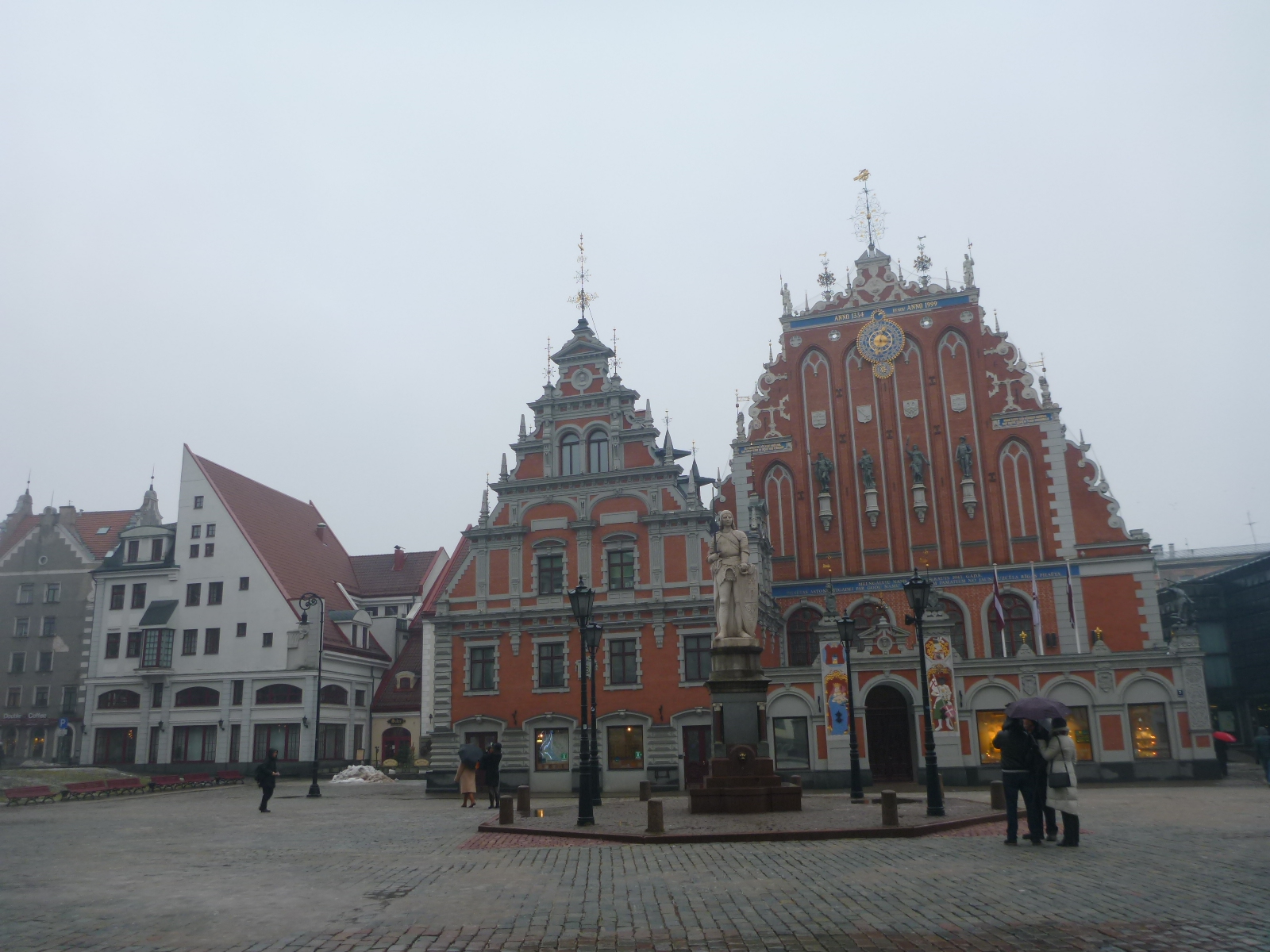
Blackheads House in Riga, Latvia.
5.Pelion, Greece
Pelion sits on the mainland, on a long peninsula where 24 recognised villages are spread between the Pagasetic Gulf and the Aegean side rather than grouped into one resort strip. Travellers move between stone-built settlements and the sea on old kalderimi paths that once linked villages and harbours for trade and now serve as walking routes, so access to many bays still begins with a path rather than a direct car drop-off.
Stays tend to cluster around individual villages rather than a single centre. One day might begin with coffee under plane trees in a mountain square such as Tsagarada or Milies, and the next with a descent on a cobbled route to a smaller beach like Damouchari or Fakistra. Because movement is spread across these routes and small hubs, Pelion absorbs visitors without the feeling that everyone has been pushed to the same stretch of coast.
Why Stillness Changes the Experience
Across these places, the calm comes from decisions made years before visitors arrive: limits on beds, protected shorelines, scientific recognition, modest tourism volume or routes that keep movement human-scale. When those structures hold, days contain room for thought, not just momentum. Travel becomes less about fitting into a programme and more about noticing how time expands when no one is rushing you forward.