





What do cultural cities actually give you that other cities don’t? The honest answer is a particular kind of density – of music, architecture, memory, and the layered evidence of how people have organised their lives around beauty over long periods of time. Salzburg and Prague both have that density, and they have it in different enough proportions that visiting one after the other is more illuminating than visiting either alone.
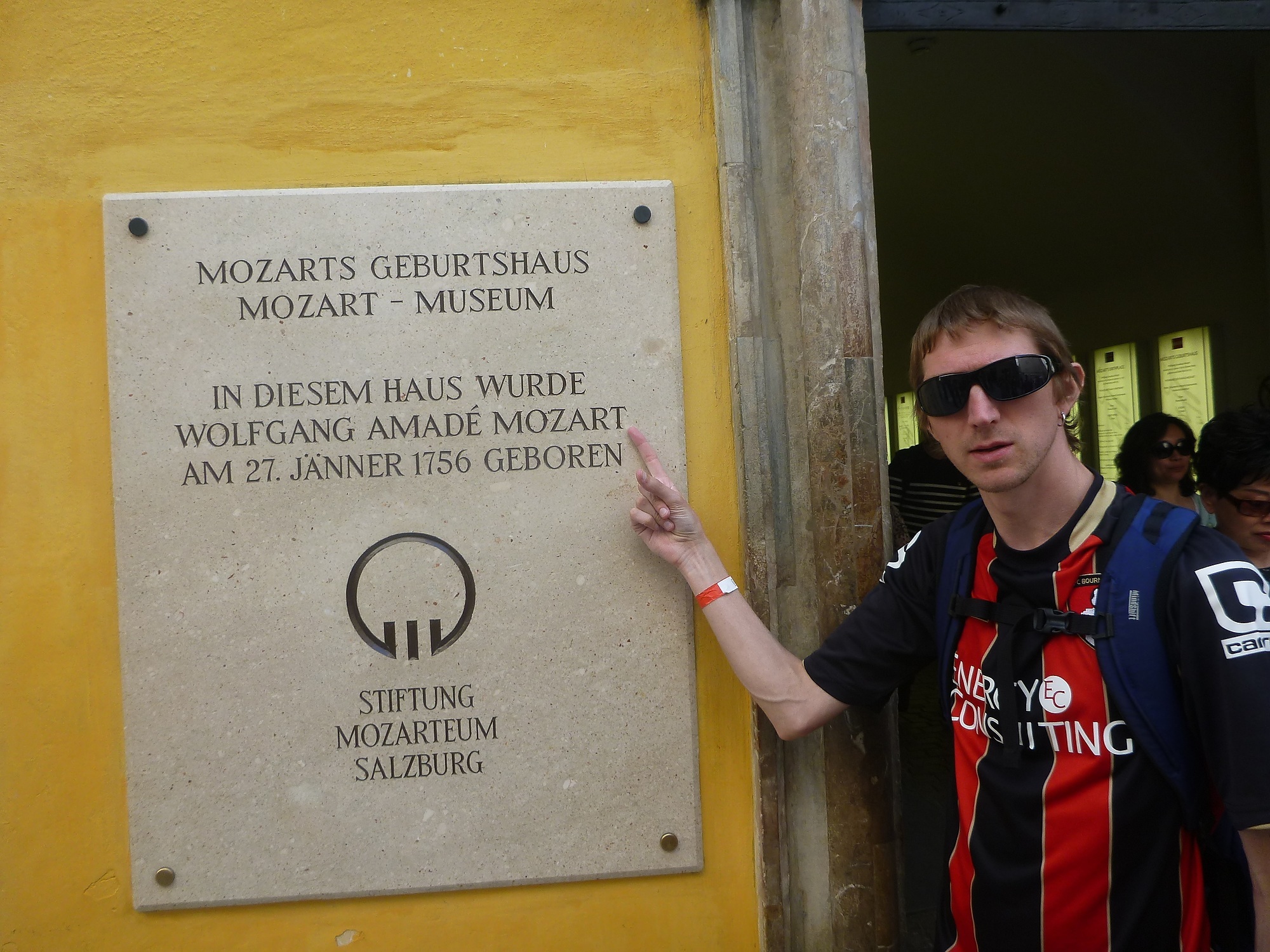
Outside Mozart’s Birthplace, Salzburg
Salzburg: The City Mozart Couldn’t Wait to Leave
Wolfgang Amadeus Mozart was born in Salzburg in 1756, spent most of his childhood and young adulthood there, and left for Vienna in 1781 with considerable relief, having grown to find the provincial court culture of his native city suffocating. The city that has since built an entire tourist economy around his memory would probably amuse him. The Mozarteum Foundation, the Salzburg Festival (founded in 1920 and running annually from late July to August), the Mozart Residence and Birthplace museums on Getreidegasse, and the chocolate confection named after him that appears in every shop window are the infrastructure of a city that has decided its most important product is a composer who didn’t especially want to be associated with it.
The train Vienna to Salzburg on the Railjet or the Westbahn service takes around two hours and twenty-five minutes and deposits you at Salzburg Hauptbahnhof, a 20-minute walk or short bus ride from the historic centre. The journey from Vienna crosses the flat Marchfeld and the edge of the Vienna Woods before entering the Alpine foothills of Upper Austria, and the landscape shifts progressively from the open Pannonian plain to the compressed mountain terrain that surrounds Salzburg on three sides.
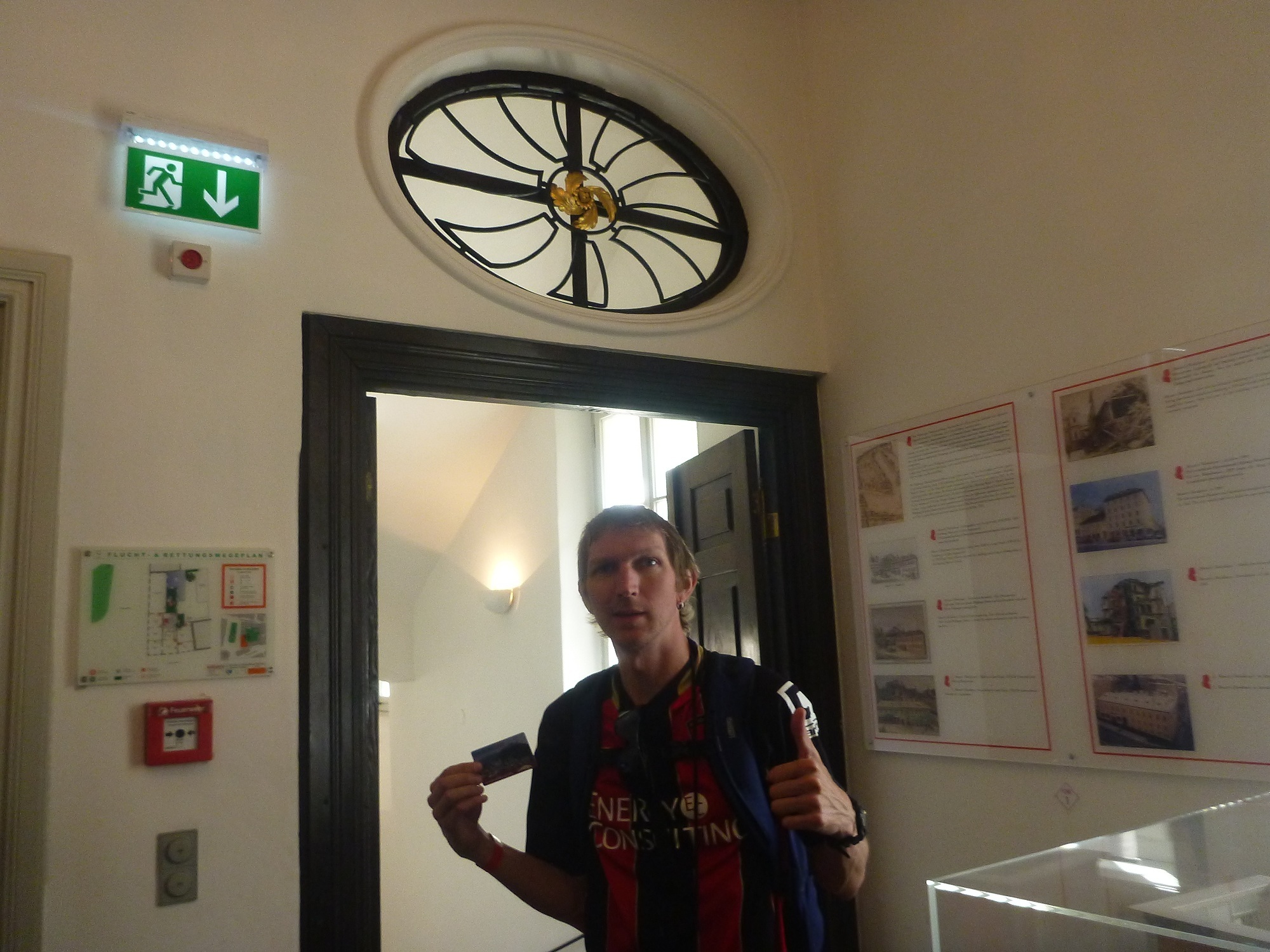
Inside Mozart’s Residence, Salzburg #visitsalzburg
What Salzburg Actually Contains
The Hohensalzburg Fortress above the old city is the largest fully preserved medieval castle in the German-speaking world and has been continuously occupied since 1077. The funicular that accesses it from the old city is the most convenient approach, but the path up through the Festungsgasse takes around 20 minutes and gives better views of the Salzach valley and the alpine peaks to the south. The Residenz Palace in the Residenzplatz, where the Prince-Archbishops of Salzburg held court for centuries, holds a collection of Flemish and Dutch paintings in the state rooms that is more significant than most visitors expect, including works by Rubens, Rembrandt, and Brueghel assembled by the archbishops whose patronage built the Baroque city visible from the fortress above.
The Salzburg Festival, if your visit coincides with it, is the densest concentration of classical music performance in the world – opera, orchestral concerts, chamber music, and theatrical productions across multiple venues in the city for five weeks. Tickets for the major productions (particularly the opera performances in the Grosses Festspielhaus) sell out months in advance, but smaller events and the Mozartwoche festival in January are more accessible.
The Rail Bridge to Prague
The Vienna to Prague trains run on a route that takes around four hours on direct services and connects two of the most architecturally significant cities in Central Europe without requiring a change. The journey passes through Brno, the Czech Republic’s second city and an underrated destination in its own right – the Villa Tugendhat, a Mies van der Rohe building from 1930 that is a UNESCO World Heritage Site, is a 20-minute taxi from Brno station and is viewable by guided tour. The Czech and Slovak Railway (ČD) and Austrian Federal Railways (ÖBB) both operate services on the route; booking in advance gives access to the best fares and the Railjet carriages are comfortable for the journey length.
Arriving in Prague by train at Praha hlavní nádraží – the main station, an Art Nouveau building from 1909 with a domed central hall and decorative facade that most passengers pass through too quickly to notice – is the most architecturally appropriate arrival in a city where the built environment is the primary reason for coming. The station is a ten-minute walk from Wenceslas Square and 20 minutes from the Old Town Square, which means you’re immediately inside the city without transit friction.
Prague: Reading the Old Town
Prague’s Old Town Square is one of the most complete medieval urban spaces in Europe and the most photographed place in the Czech Republic, which creates a familiar problem: the images travel so widely that arriving with genuinely fresh eyes requires deliberate effort. The Astronomical Clock on the southern face of the Old Town Hall tower was first installed in 1410 and displays the time in four simultaneous systems: Central European Time, Old Bohemian Time (counting from sunset), Babylonian Time, and Sidereal Time, alongside the position of the sun and moon in the zodiac. The mechanical apostle procession on the hour is secondary to the clock mechanism itself, which rewards sustained attention from someone who knows what they’re looking at.
The Gothic Týn Church that dominates the eastern side of the square has an interior that most visitors don’t enter, deterred by the unremarkable doorway through the arcade of the building in front of it. Inside, the nave is high, dark, and filled with Baroque furnishings accumulated over the centuries, and the tomb of the astronomer Tycho Brahe is in the north aisle – he died in Prague in 1601 while serving as imperial mathematician to Rudolf II, and the cause of death (long attributed to a ruptured bladder from excessive politeness at a royal banquet) was reassessed in 2010 when examination of his hair suggested mercury poisoning. The question of who might have administered it – possibly his assistant Johannes Kepler, who stood to inherit his observational data – is one of the more intriguing cold cases in the history of science.
Malá Strana and the Castle Above
The Lesser Town (Malá Strana) below Prague Castle has a Baroque character distinct from the medieval density of the Old Town – wider streets, larger palaces, the Church of St Nicholas with its 79-metre dome visible from most points in the city. The Wallenstein Garden behind the Wallenstein Palace is the finest Baroque garden in Prague and is free to enter in summer; the artificial stalactite grotto on the eastern wall and the peacocks that move freely through the garden give it a quality of slightly theatrical Baroque fantasy that is entirely period-appropriate. The palace itself, built by the Habsburg general Albrecht von Wallenstein between 1623 and 1630 and requiring the demolition of 23 houses, a brick works, and several gardens to accommodate it, is now the seat of the Czech Senate and the state rooms are open to the public on weekends.
Conclusion
Salzburg and Prague answer the question of what cultural cities give you in complementary ways. Salzburg gives you a living musical culture embedded in Baroque architecture in an Alpine setting – compact, concentrated, seasonally intense. Prague gives you a medieval and Baroque cityscape that survived the 20th century largely intact, with layers of history accessible through streets, buildings, and collections that reward systematic exploration over several days. Both cities are best understood slowly, on foot, with enough time to return to the places that first interested you and look at them again.