





Rail travel through southern Europe gives you the landscape between the cities as well as the cities themselves – the olive groves and cork oak forests of the Alentejo, the limestone ridges of the Spanish meseta, the Douro valley terraces catching the afternoon light. Those intervals are not dead time. They are the connective tissue that makes the destinations at each end feel like parts of the same place rather than separate stops.

Bridges of Porto, Palaces of Lisbon, and Beyond: A Rail Journey Through Southern Europe
Porto: The City the Douro Made
Porto sits at the mouth of the Douro river and is in every material sense the product of what that river carried down from the interior. The port wine trade that built the city’s wealth in the 17th and 18th centuries still operates across the river in Vila Nova de Gaia, where the lodges of Taylor’s, Graham’s, Sandeman, and the other major houses line the waterfront and produce the aged tawnies and vintage ports that made the region famous. The Dom Luís I Bridge connecting Porto to Gaia is the most recognisable image of the city – a double-deck iron arch designed by a student of Gustave Eiffel and completed in 1886, the upper deck at 60 metres above the river carrying the metro and pedestrian traffic, the lower deck at water level carrying trams and vehicles. Walking the upper deck in either direction gives a view of the Douro canyon and the stacked rabelo boats on the Gaia quayside that explains why so many people photograph this specific angle.
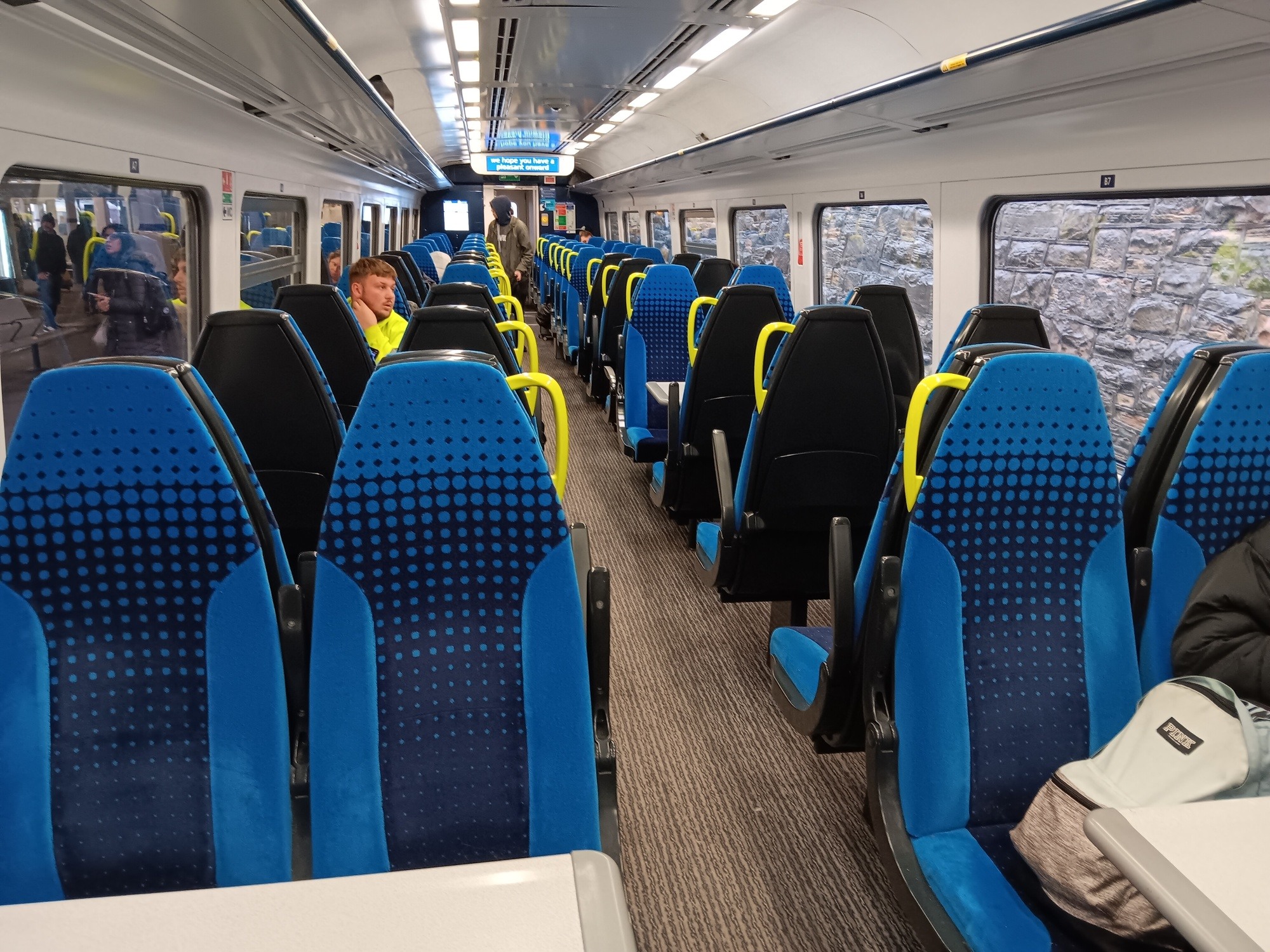
The Porto to Lisbon high-speed train on the Alfa Pendular service takes around two hours and forty-five minutes, departing from Porto Campanhã station (connected to the city centre by metro and suburban train) and arriving at Lisbon Oriente before continuing to Santa Apolónia in the historic centre. The journey passes through the Douro valley south of Porto, crosses the flat agricultural landscape of the Beira Litoral, and descends into the Tagus basin as Lisbon approaches. Booking in advance through CP (Comboios de Portugal) gives access to the best fares; the Alfa Pendular tilting train maintains higher speeds through curves than conventional rolling stock and the journey is comfortable enough to use productively.
Bridges of Porto, Palaces of Lisbon, and Beyond: A Rail Journey Through Southern Europe
What Porto Holds
The azulejo tile art in Porto’s public buildings is the most concentrated in Portugal outside Lisbon – the São Bento railway station concourse, covered in blue-and-white panels depicting scenes of Portuguese history installed in the 1930s, is the most visited but the Igreja do Carmo on the Rua do Carmo has an exterior facade of azulejos covering the full width of the building that is the largest tilework panel in the city and frequently overlooked because the street in front of it is narrow enough to require stepping back some distance to see it whole. The Livraria Lello bookshop near the university is the most photographed bookshop in the world and the staircase and Art Nouveau interior justify the entrance fee (redeemable against a purchase) if you arrive at opening time before the queue builds.
The High-Speed Rail Landscape
The high speed train network in Iberia is more extensive than most visitors realise before arriving. Spain’s AVE network is the longest high-speed rail network in Europe and connects Madrid with Barcelona, Seville, Valencia, Bilbao, and the French border at speeds up to 310 kilometres per hour. Portugal’s high-speed connections are currently more limited but the Alfa Pendular services connecting Porto, Coimbra, and Lisbon represent the functional spine of Portuguese rail travel. The proposed high-speed line between Porto and Lisbon, which would cut the journey to around one hour, has been in planning for years and moves intermittently toward construction; in 2026 the Alfa Pendular remains the fastest option and is adequate for a journey this length.
Coimbra, the university city roughly equidistant between Porto and Lisbon, is worth treating as a stop rather than a transit point. The university occupies the hilltop above the old city on a site that has been an academic institution since 1537, and the Joanine Library within the university – a Baroque hall completed in 1728 with ceiling-to-floor bookshelves of gilded wood housing around 200,000 volumes – is one of the finest library interiors in Europe. The colony of bats that lives in the library is tolerated because they eat the insects that would otherwise damage the books; the library is sprinkled with bat-repelling wood shavings on the desks each evening.
Lisbon: The City on Seven Hills
Lisbon was rebuilt almost entirely after the earthquake, tsunami, and fire of 1755 that destroyed most of the city on All Saints’ Day while the population was at mass. The reconstruction under the Marquis of Pombal produced the Baixa district – a grid of uniform streets between two hills, with the Praça do Comércio opening to the Tagus at one end and the Praça do Rossio anchoring the northern end. The rationality of the Pombaline grid makes the surrounding districts – the Alfama, the Mouraria, the Bairro Alto – feel more organic by contrast, their pre-earthquake street layouts preserved because the earthquake spared the hilltops that the tsunami, channelled by the Tagus estuary, could not reach.
The Jerónimos Monastery in Belém at the western edge of the city is the major monument of Portuguese Manueline architecture, built between 1501 and 1551 to commemorate Vasco da Gama’s voyage to India and funded by the spice trade that the voyage opened. The cloisters in particular – two storeys of elaborately carved limestone columns with maritime motifs (ropes, armillary spheres, coral) woven into the stonework – are the most complete example of the Manueline style in existence. The Torre de Belém nearby, a small fortified tower built on a platform in the Tagus and now marooned closer to the bank by 18th-century changes to the river’s course, is the symbol most associated with Lisbon internationally and better understood as a watchtower and customs post than as a palace, which its scale makes clear.
Beyond Lisbon
The rail network radiating from Lisbon connects the Alentejo wine plains, the hill towns of the Serra da Arrábida, and the Algarve coast to the south. The train to Sintra from Rossio station takes 40 minutes and deposits you at the foot of the Sintra hills, where the UNESCO-listed cultural landscape of 19th-century royal palaces, aristocratic quintas, and Romantic gardens spread across forested hillsides represents the most concentrated fantasy architecture in Portugal. The National Palace of Pena, visible from Lisbon on clear days, was built by Prince Ferdinand II from 1842 in a combination of Moorish, Manueline, Gothic, and Renaissance styles that might suggest incoherence but achieves, against expectation, something exuberant and specific.
Conclusion
The rail journey through southern Europe is most rewarding when treated as a sequence of places linked by landscape rather than a list of cities to be processed. Porto and Lisbon each hold several days of material, and the train between them passes through country that rewards attention from the window rather than the distraction of a screen. The journey is the structure; the cities are what you build on it.