





I pulled an old travel bag down from the loft the other week, one I had not used since somewhere around 2009, and the side pocket was a little time capsule of how we used to travel. There was a folded paper map of Eastern Europe gone soft at the creases, a tiny phrasebook, a disposable camera I never finished, a Lonely Planet brick with half the pages falling out, and a separate MP3 player with the headphones knotted into a ball that no human being has ever successfully untangled. I just stood there laughing at it. All of that, every single item, lives on one slab of glass in my pocket now.
The One Thing in My Backpack That Replaced Everything Else
I have been on the road, on and off, for the better part of fifteen years, and if you ask me what has actually changed about backpacking in that time, it is not the destination. The night buses are still horrible. The border guards are still grumpy. The hostel showers are still cold at exactly the wrong moment. What changed is the kit. The backpack got lighter and lighter, and the reason it got lighter is that one device slowly ate everything else.
The map went first
The paper map was the first to go, and honestly good riddance, because I have stood on more rain soaked street corners trying to refold a map the wrong way than I care to remember. Now I just download the city before I land and the little blue dot does the rest, even with no signal at all. Most of the good offline map apps are built on top of OpenStreetMap, which is this enormous free map of the entire planet that volunteers have been quietly building for years, and it has saved my bacon in places where Google’s maps were basically a blank beige rectangle with a single road drawn through it.
I remember being lost in the back lanes of Tbilisi at about one in the morning, no signal, no clue, and the offline map just calmly pointing me home like it was no big deal. That moment alone justified the whole smartphone era for me. The paper map could never. The paper map would have been a wet ball in a bin by then.
The One Thing in My Backpack That Replaced Everything Else
Then the camera, which still stings a bit
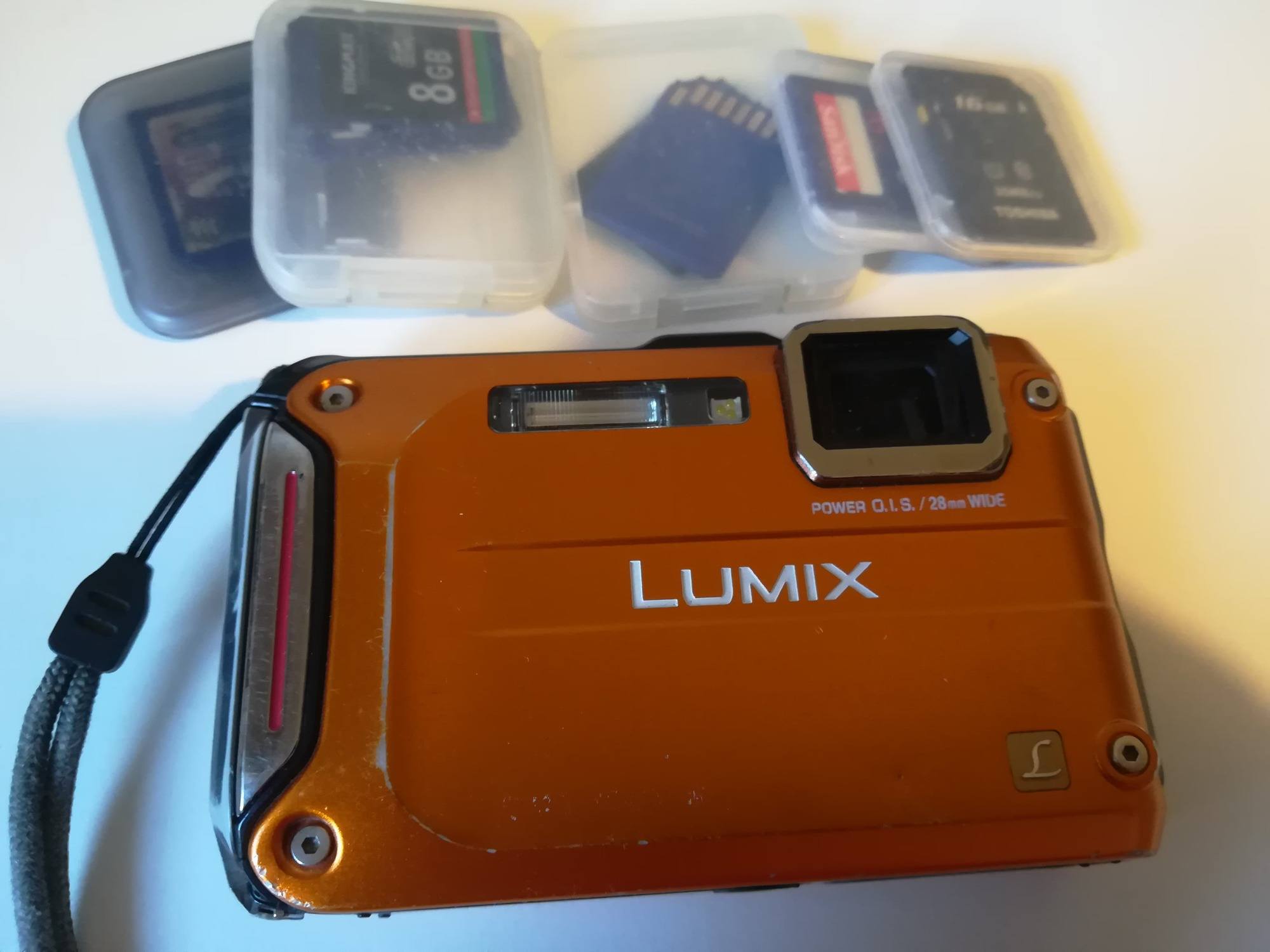
The camera is the one I have complicated feelings about. I loved my little point and shoot. There was a ritual to it, the winding, the waiting, not knowing if the shot worked until weeks later. But let us be honest with ourselves, the phone camera in my pocket now is better than any compact I ever owned, and it is always there, which is the whole point. The best camera is the one you actually have on you when the light goes golden over a mountain you did not expect to be beautiful.
I shoot way more now. Some would say too much. I definitely have four hundred near identical photos of the same Albanian sunset that I will never look at again. But I also have shots I would never have gotten in the film days, because back then every frame cost money and you rationed them like water in a desert. Now I just fire away. The downside is that I sometimes catch myself watching a moment through the screen instead of with my own two eyes, and that is a real loss, I will not pretend it isn’t.
The One Thing in My Backpack That Replaced Everything Else
The guidebook and the timetable
The Lonely Planet brick was a genuine weight in the bag, both literally and a bit emotionally, because everyone carried the same one and so everyone ended up in the same three cafes. The phone broke. Now the research lives online and updates itself, instead of being frozen in whatever was true two years before the book got printed.
Train travel is where this really shines for me. Working out how to get an overnight train across a country you have never been to used to be a nightmare of guesswork. These days I just check the international train guides at Seat 61, which is run by a former railwayman and is, hands down, the most useful travel resource ever made for anyone who likes going overland. I plan whole trips around it now, on my phone, from a hammock. The bloke who runs that site has done more for slow travel than entire tourism boards, and you can quote me on that.
The thing that gets you through the dead hours
Here is the part nobody really plans for but everybody deals with. The dead time. Travel sounds like it is all temples and sunsets, but a huge slice of it is just waiting. The 31 hour bus across Argentina. The midnight to dawn stretch on a ferry. The layover so long it grows its own little civilization. And the phone is what gets you through it, because it quietly ate the Walkman and the paperback and the deck of cards too.
I have a whole loadout for the dead hours. Podcasts downloaded for the no signal stretches, a couple of shows, an audiobook I pretend I am going to finish. And when my brain is too fried for anything that requires a plot, sometimes I just want something bright and brainless that gives me a little hit of fun without asking anything of me. For a lot of travellers that ends up being mobile gaming, and a fair few people I have shared a bus with swear by mobile slots for exactly this, a quick few spins to make the kilometres tick by faster. Jackpot Mobile Casino is one of the ones built properly for a phone screen, so the games load quickly and run fine even on a wobbly connection, which matters a lot when you are somewhere in the mountains with one flickering bar of signal.
It is the same impulse as a crossword or a hand of solitaire really, just a way to occupy the restless part of your head when the scenery has gone dark and there is nothing to see out the window for the next six hours. Jackpot Mobile Casino has a decent enough spread of these to pick from, so you are not stuck spinning the same tired game across an entire continent. The trick, and I will say this plainly because it matters, is to set yourself a limit before you start and treat it as pure entertainment with a budget, the same way you would a couple of beers, and then put it away. Bored on a bus is a daft reason to spend money you did not mean to. Set a cap, enjoy the spins, done. Anyway, the point is the phone holds all of it now, the podcasts and the shows and the games, where I used to carry three separate gadgets and a book.
The wallet and the translator, gone too
Two more things vanished from the bag that I never even think about now, and thats probably the truest sign of how completely the phone took over. The first is money, or rather the whole anxious apparatus of money. I used to travel with a money belt strapped to my stomach like some sort of paranoid kangaroo, stuffed with damp banknotes and a folded photocopy of my passport and a panic stash of dollars for emergencies. Now I tap my phone on a card reader in a noodle shop in a town whose name I cannot pronounce and it just works. The travel cards and the banking apps live on the same glass rectangle, and I can move money, check what I have left, and freeze a card the second it goes missing, all from a bus seat. The number of grim hours I used to lose hunting for a working ATM in a strange city, you would honestly not believe. A lot of that stress just quietly evaporated.
The translator is the other one, and this still feels like genuine magic to me even now. I point the camera at a menu written in an alphabet I cannot read and the words rearrange themselves into something I understand, right there on the screen. I have held proper conversations with people I share not a single word with, the two of us hunched over my phone passing it back and forth, laughing at the wonky translations. Is it as good as really speaking the language? Of course not. Nothing beats learning even ten words of their tongue, people light up when you try. But for the moments when you are truly stuck, when you need to find a pharmacy or explain that you are allergic to something, it has gotten me out of bother more times than I can count.
And here is the slightly mad part of it all. The maps, the camera, the timetables, the money, the translator and the dead-hour distractions, all of that used to be six or seven separate things you had to remember to pack, charge, protect and not lose. Now it is one thing. One thing to keep charged, one thing to not drop down a squat toilet, one thing that, if it goes missing, takes your entire travelling life with it. Which is a brand new kind of worry, but a worry for another article.
What the glass rectangle cannot replace
I do want to be careful not to turn this into an advert for staring at a screen, because that is genuinely not what travel is for. The phone has brilliant infrastructure. It is a rubbish destination.
Some of my best moments on the road happened precisely because the phone was dead or had no signal. The conversation with the old farmer in Transnistria lasted two hours and needed no shared language at all. Getting properly, gloriously lost in a medina because the blue dot had given up. The night the power went out across a whole Nepali valley and the stars came out so thick it honestly did not look real. None of that is on my phone. None of that could be.
So I have landed on a sort of rule for myself, after all these years and all these miles. Let the device carry the boring stuff. Let it hold the map and the timetable and the camera roll and the dead-hour distractions, all the logistics and the waiting, the bits that used to weigh down the bag and the brain. That frees you up to be fully present for the bits that actually matter, the ones you will still be telling people about in twenty years. The phone is there to handle the journey so you can pay attention to the trip. Those are two different things and it took me an embarrassingly long time to work that out.
I put the old travel bag back in the loft, by the way. Kept the paper map though. Not because I will ever use it again. Just because the creases in it are basically a map of who I used to be, and some things you do not throw away even when your phone has made them completely useless. Now then, where am I going next?